
Following Jesus together in Rotterdam—and discovering that the narrow way was never meant to be walked alone.
by Jodi Winger
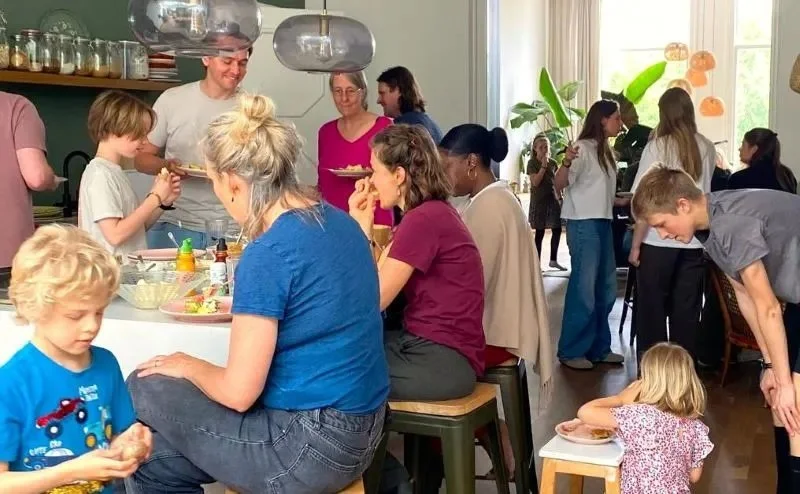
I greet an older woman on the street. She tells me she is from Turkey and has been living in my city for three years. She walks with a limp and carries a bag of strawberries.
She seems surprised when my friend from the community and I stop to speak with her and invite her to a dinner we’re hosting just a few minutes away. Soon she warms to us. In broken Dutch we talk about how different the weather is from Turkey, about her grown children and grandchildren, and about what it has been like to make a home in the Netherlands.
She wants to come, but isn’t sure how to find the house, so I offer to walk with her. As she hobbles beside me, smiling, I’m struck by how quickly she entrusts herself to a stranger. In that simple walk, I realize how many of the deepest longings of my heart come together: to follow Jesus faithfully, to love the stranger, and to experience the abundant life he invites us into.
A year ago, my family of six moved from the United States to Rotterdam, the Netherlands. We came to join an intentional community of Jesus-followers who have built their shared life around prayer.
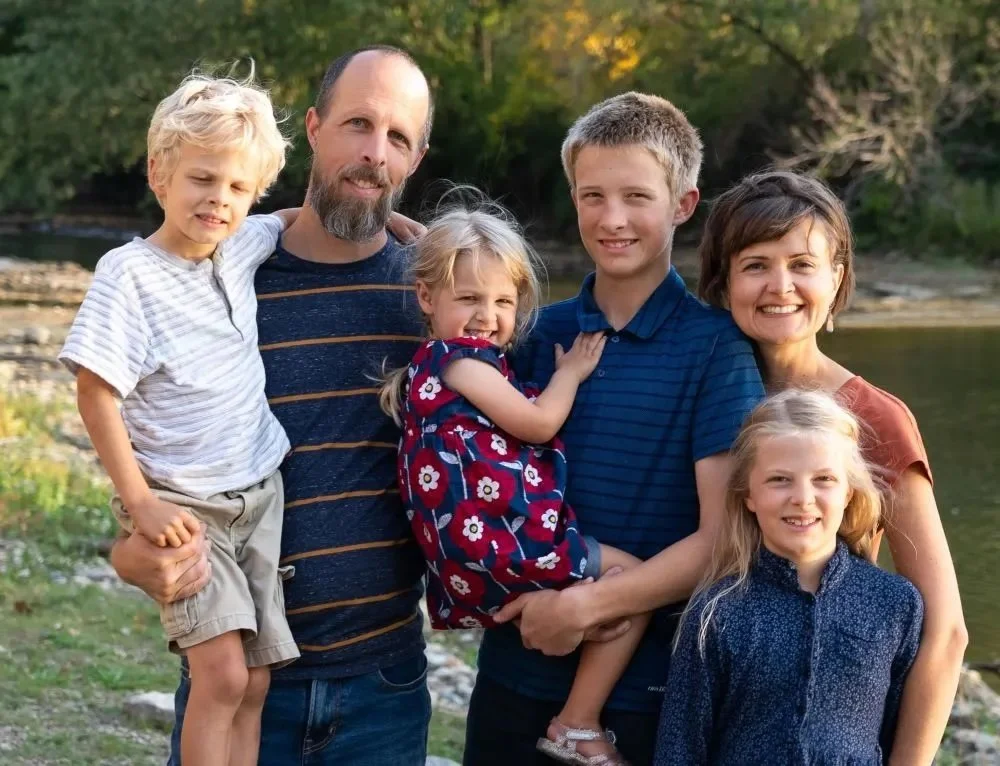
Daryl & Jodi Winger family. Photo: Christina Hammerberg
For most of our married life, my husband and I have been drawn toward intentional Christian community. We were married while living in one, and over the years that desire only grew stronger until we could no longer ignore it. We came to Rotterdam with open eyes, knowing both the beauty and the difficulty of community life—and knowing how much we still had to learn.
This past year has brought more spiritual growth than any other season of our lives.
We have learned what it means to mourn with those who mourn and rejoice with those who rejoice. We have worshiped and cried out to God together, discovering again that apart from him there can be no deep community. Perhaps most importantly, we have been challenged to live from our true selves rather than the selves we wish were true. That kind of honesty was something I had admired from a distance for years. Living in community has begun teaching me what it actually looks like.
Following Jesus Together
The older I get, the more convinced I become that my best chance of following Jesus faithfully is within a community of Christians who intentionally share life together.
I have longed for deeper obedience to Christ, greater death to self, and a fuller expression of the gospel. Increasingly, I struggle to imagine those desires taking root in a half-hearted, non-proximate expression of Christian life.
David Janzen captures what I have been feeling:
“Many of us are increasingly aware that to resist community is to deny a basic truth about our humanity. Jesus doesn’t want to bring shalom only to you and me, but to everything between you and me—to vivify our relationships with the life of heaven. This is the big timeless call to community that God is waking us up to.”¹
What Jesus invites us into—loving our enemies, refusing to be ruled by anxiety, living generously, opening ourselves to the vulnerable and the needy—is deeply beautiful to me.
But if I’m honest, it is also overwhelming.
Left to myself, I can find endless reasons not to obey.
Living in community doesn’t make discipleship easier. It helps us remain faithful when obedience becomes difficult.
We live in a culture that prizes autonomy, independence, and self-reliance, even while constantly reminding us that we cannot flourish alone.
Dallas Willard writes:
“Spiritual formation cannot, in the nature of the case, be a ‘private’ thing, because it is a matter of whole-life transformation. You need to seek out others in your community who are pursuing the renovation of the heart.”²
If Jeremiah is right that “the heart is deceitful above all things,”³ then intentional community offers something profoundly important. It asks us to surrender the false security of individualism in exchange for something far better: deep connection, mutual trust, shared joys, shared burdens, and the courage to let others truly know us.
That also means allowing people to see our weaknesses—and allowing ourselves to see theirs.
For many years I have prayed that God would change my heart and show me the way forward. Again and again, his invitation seems to be the same:
“Take the risk of deep community and find Me there.”
“Take the risk of deep community and find Me there.”
The Narrow Way
When I look at the life Jesus invites us into, I picture a narrow passage that we are meant to move through together. We squeeze through shoulder to shoulder, clinging to one another as we cling to Christ, learning to love, forgive, challenge, and encourage one another the way he did.
Community is messy. It is wildly imperfect, uncomfortable, and often full of drama. At times it feels inefficient, inconvenient, and even painful. At its worst, it can be deeply wounding.
Perhaps that is because community requires vulnerability. And whenever we choose to be vulnerable, we choose to take a risk.
Yet Jesus is both the reason the risk is worth taking and the reason we can survive whatever it costs. Following him has never simply meant adding him to our own plans. It means laying down our own way in order to walk his.
I know each of us will one day stand before God individually. But I often wonder how choosing not to live so individually now may shape who we become before that day arrives.
Community is messy, wildly imperfect, uncomfortable, and often full of drama. Yet Jesus is both the reason the risk is worth taking and the reason we can survive the outcome.
Welcoming the Stranger
One of the rhythms of our community here in Rotterdam is gathering on the first Saturday of every month for an extended time of worship, prayer, and fellowship.
For our June gathering, we decided to live out Jesus’ parable of the great banquet (Luke 14:15–24). After worshiping together and praying over the evening, we divided the preparations. Some cooked. Others set tables. Others assembled gift bags. Several of us spent the afternoon walking through the neighborhood, inviting anyone we met to join us for dinner. Even minutes before the meal began, people were still on the sidewalks extending invitations to strangers.
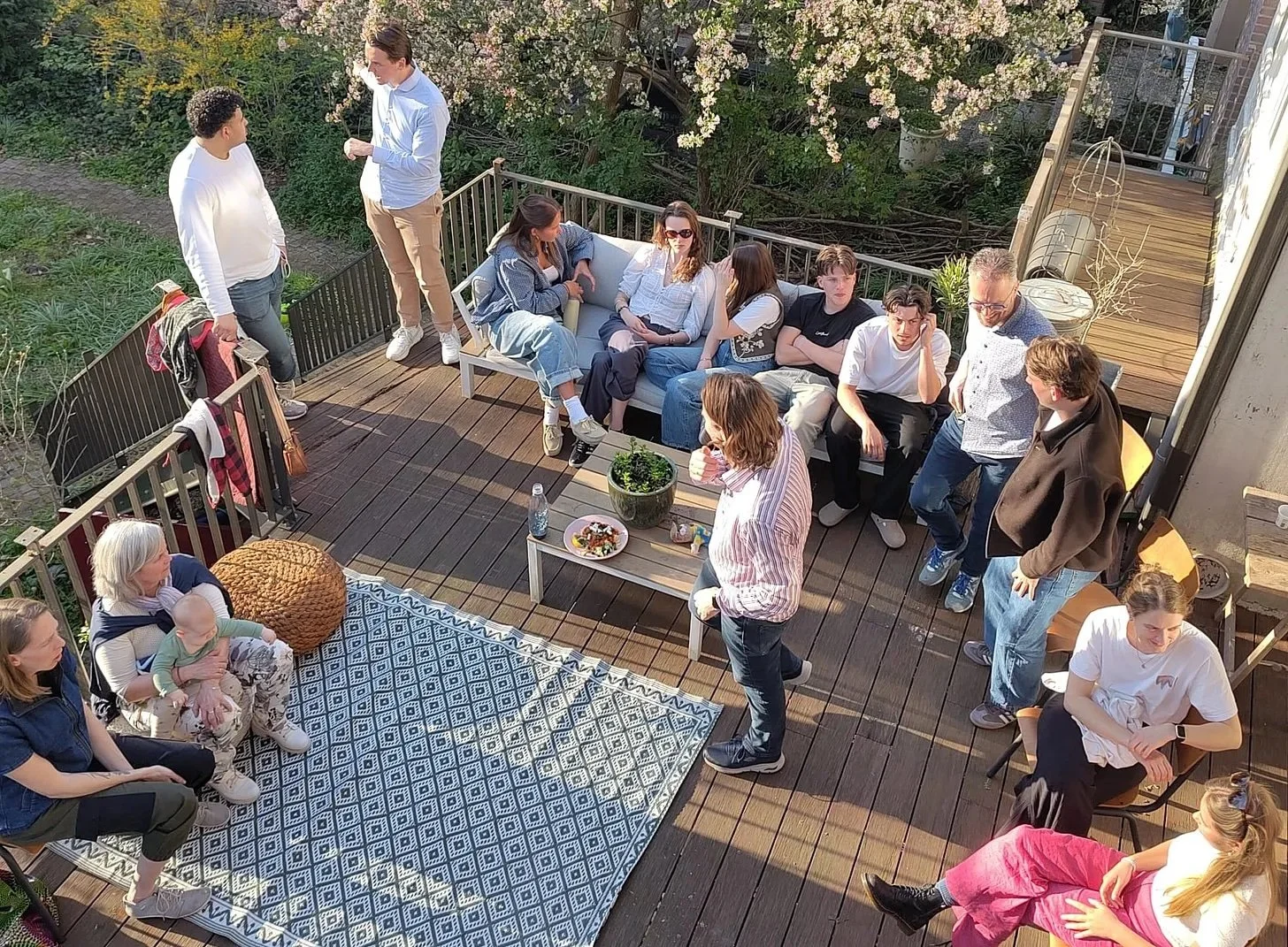
When everyone arrived, we gathered around beautifully prepared tables in the home of one of our community members. We prayed, broke bread together, and shared conversations with people from many different backgrounds and walks of life.
I found myself deeply moved—not only by our community’s willingness to open its doors, but by the courage of those who accepted the invitation. It takes remarkable openness to walk into the home of people you have never met and sit down for a meal.
As the evening unfolded, I realized that everyone present had taken a risk.
Some had risked opening their homes.
Some had risked opening their schedules.
Some had risked approaching strangers on the street.
Others had risked trusting complete strangers enough to walk through the front door.
It struck me that this is often how the Kingdom of God grows: one small act of courageous hospitality at a time.
What Community Makes Possible
As I walked home that evening, I carried two convictions with me.
The first was that hospitality to strangers is deeply rewarding. There is something of heaven in those moments when we welcome someone we do not know, trusting that Christ is already at work before we arrive.
The second was that what Jesus asks of us becomes not only more beautiful in community, but often more attainable. Sharing the work, praying together, encouraging one another, and reminding each other why we are doing it transforms what might otherwise feel overwhelming into something joyful.
As I think back to the woman from Turkey walking beside me with her bag of strawberries, I realize she has become part of the answer to prayers I have been praying for years.
For so long I asked God to make me more like Christ and to show me what that would look like. I expected dramatic moments of transformation. Instead, he invited me into a shared life where faithfulness often looks ordinary: setting another place at the table, walking beside a stranger, listening to someone’s story, praying with friends, carrying one another’s burdens.
Perhaps this is one of the greatest gifts of intentional community. It creates the kind of life in which these moments become possible—and even natural.
What Jesus asks of us is costly.
But what he gives in return is glorious.
Sometimes his gifts arrive in unexpected forms: a shared meal, faithful friends, or a limping immigrant woman carrying strawberries whose story becomes intertwined with our own.
Looking back, I've realized that the greatest risk was never moving to another country. It was allowing myself to be fully known. And that has also become the place where I have most deeply encountered the grace of God.
What Jesus asks of us is costly. But what he gives in return is glorious.
I am deeply grateful that Jesus never asks us to follow him alone. The One who calls us also walks with us, and he continues drawing others into that same journey.
When I think about the person I hope to become, I know that Jesus himself is both the foundation and the goal. But I have also come to believe that intentional community is one of his primary gifts for helping us grow into his likeness.
His perfect love frees us from the fear of what vulnerability might cost.
He is trustworthy.
He is faithful.
And as we learn to work out our salvation side by side, I am discovering that some of the deepest places of transformation are found not in pursuing Jesus by myself, but in taking the risk of following him together.
References
1. David Janzen, The Intentional Christian Community Handbook: For Idealists, Hypocrites, and Wannabe Disciples of Jesus (Paraclete Press, 2013), 30.
2. Dallas Willard, Renovation of the Heart: Putting on the Character of Christ (NavPress, 2002), 114.
3. Jeremiah 17:9.
Jodi and Daryl Winger and their four children moved from the United States to join a prayer-centered intentional Christian community in Rotterdam, the Netherlands.